
Tuesday, February 10, 2026
7 min read
Supermarket Fuel vs Branded Fuel: Is It Really Bad for Your Car?
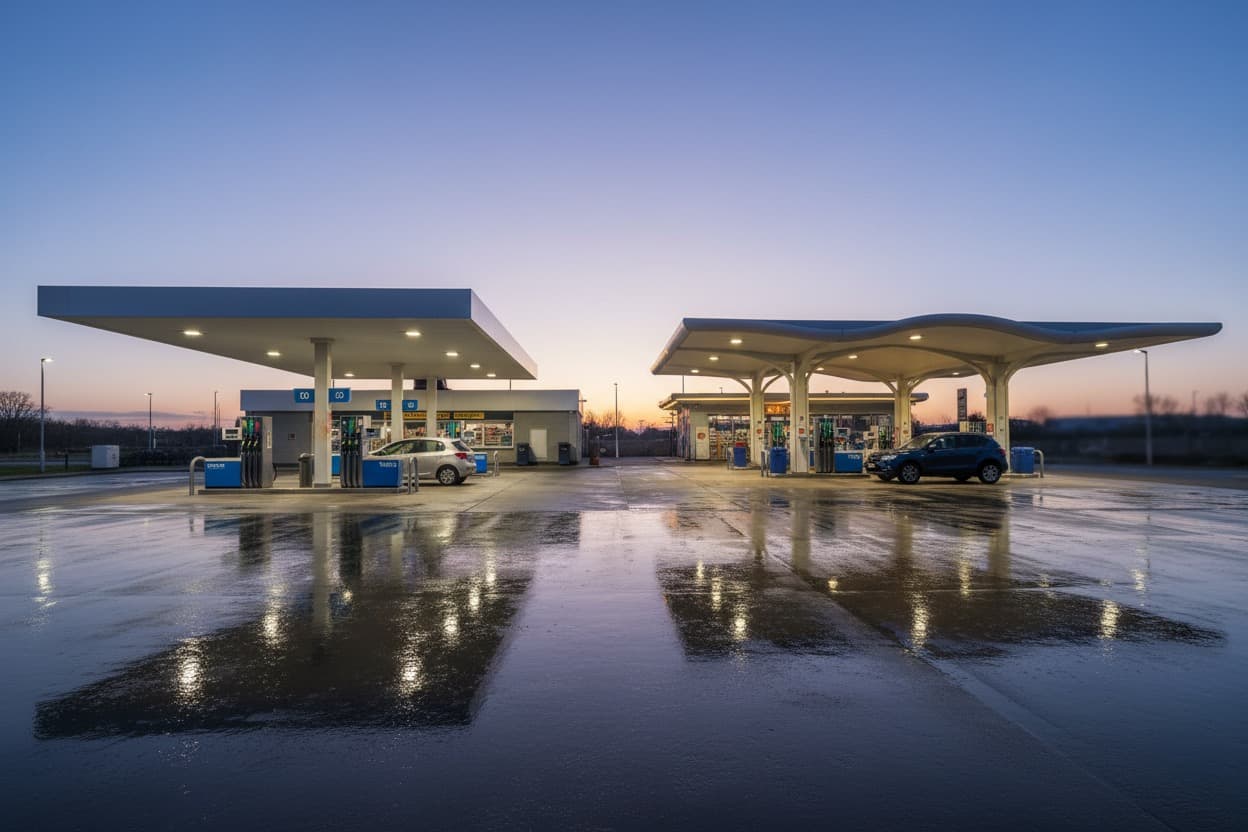
You’ve probably heard it at some point on a forecourt or in the pub:
“Don’t use supermarket fuel, it’s rubbish – it’ll ruin your engine.”
But is that actually true, or just another motoring myth that won’t die?
Let’s take a proper look at supermarket fuel vs branded fuel, plus E10 petrol and high-octane premium fuels, and see what really matters if you’re driving around Barnsley and across South Yorkshire.
1. Is supermarket fuel “worse” than branded fuel?
Short answer: For most modern cars, no – it’s not “bad” or unsafe. All fuel sold in the UK has to meet the same basic standards.
The UK fuel supply is heavily regulated.
Many brands (including supermarkets and “premium” names) often share the same refineries and depots.
The difference is usually in the additive packs that are blended in – cleaning agents, detergents, and so on.
What this means in real life:
For a normal daily driver (Fiesta, Corsa, Focus, Golf, Qashqai, etc.) used for school runs, commuting, and motorway trips, supermarket fuel is perfectly fine if the car is in good condition and properly serviced.
If you’re running a high-performance, tuned, or very high-mileage engine, you might notice more benefit from “branded” fuels with stronger additive packs – especially over long periods.
So no, supermarket fuel isn’t “poison.” But there can be small long-term differences in how clean your engine and fuel system stay, especially on more sensitive engines.
2. What’s the deal with E10 petrol?
You’ll see E10 on forecourt labels now for regular unleaded.
E10 means: up to 10% ethanol mixed into the petrol.
Previously, the UK mainly used E5 (up to 5% ethanol).
E10 was brought in to help reduce CO₂ emissions overall, but it does raise a few questions.
Will E10 damage my car?
For most modern petrol cars, E10 is approved and safe. Issues mainly affect:
Older petrol cars (typically pre-2011, and especially classic or very early injection models)
Certain specific models the manufacturer hasn’t approved for E10
If you’re not sure:
There’s a government checker online (DVLA / gov.uk) where you can input your car’s details.
Or you can call the manufacturer or ask a trusted garage.
Does E10 reduce MPG?
Ethanol has slightly less energy per litre than pure petrol, so:
You might see a small drop in fuel economy vs E5 – often only a couple of percent.
In day-to-day driving around Barnsley, you may not notice it much, but on regular long runs it can add up.
If you’re chasing every last mile per gallon, this is where super unleaded (often still E5) sometimes makes sense – more on that below.
3. High-octane / premium petrol: worth it or not?
On most forecourts you’ll see:
Regular Unleaded: usually 95 RON (E10)
Premium / Super Unleaded: 97–99 RON (often still E5)
What is “octane” (RON)?
Octane is basically a measure of how resistant the fuel is to knock (unwanted detonation). Higher octane = more knock-resistant, which is useful if:
Your car was designed for higher octane (check the fuel cap/handbook – many performance or turbocharged engines recommend 98/99 RON).
You drive very hard, tow heavy loads, or do lots of motorway work in a powerful petrol car.
Will premium fuel make my normal hatchback faster?
Usually, no. If your car is designed for 95 RON:
You’re unlikely to see big performance gains just by switching to 98/99 RON.
At best, you might feel slightly smoother running or a small MPG improvement – but often not enough to offset the higher price.
Where premium fuel can help is:
On direct-injection petrol engines, the extra detergents and cleaners in branded premium fuels may help keep injectors and valves cleaner over long periods.
On older or higher-mileage petrols that have built up deposits.
But if your car is healthy, serviced, and not a performance model, you’re not missing out on something magical by using regular fuel.
4. Diesel: supermarket vs branded
The same general rules apply:
All diesel in the UK must meet the same spec.
Supermarkets and big brands often share the same base fuel.
Differences come from additives: detergents, anti-foaming agents, cold-flow improvers, etc.
For most modern diesels:
Supermarket diesel is absolutely fine for everyday use.
Some owners of sensitive high-pressure diesel engines (especially older Euro 5 / early Euro 6 units) swear that branded diesel with extra detergents helps with:
Smoother idle
Less smoke
Fewer DPF issues (when combined with the right driving pattern)
Again, it’s not a magic cure – but if a car is fussy or has had minor running issues, branded diesel can be worth trying.
5. So… is it all an old wives’ tale?
A lot of the “supermarket fuel will wreck your car” stuff is overblown, but there are small truths underneath:
Mostly myth:
Supermarket fuel is “dirty” or “contaminated” by default – false. It has to meet the same legal standards.
One tank of supermarket fuel will “ruin” your engine – nonsense.
Partly true:
Additive packs do differ between brands, and over many years/high mileages, that can influence how clean your injectors/valves stay – especially on more sensitive engines.
Some engines (especially high-performance petrols and particular diesels) may run slightly better on top-tier fuels.
For everyday motoring around Barnsley, most people can comfortably use whichever station is convenient and sensibly priced, as long as the car is well maintained.
6. Practical tips for South Yorkshire drivers
Here’s how we’d keep it simple:
Modern petrol or diesel, normal usage
Use whichever reputable station is convenient and good value – supermarket or branded.
Don’t stress about mixing brands; your car doesn’t need to “stick” to one.
Older petrol car or something E10-sensitive
Check if your car is E10 compatible.
If it isn’t, use super unleaded (E5) – this is where premium fuel becomes essential, not optional.
Performance or turbocharged petrol
Check the handbook. If it recommends 98/99 RON, use premium as often as you can.
The engine mapping may actually make more power and run safer on higher octane.
Diesel with DPF issues or rough running
Consider trying a couple of tanks of branded diesel with strong detergent packs.
Combine it with a good motorway run (not just short trips) to help keep the DPF happy.
Focus on servicing, not just fuel
Regular oil changes, good quality filters, and proper servicing matter far more than whether you filled up at Tesco or Shell last week.
Where Any Colour Car fits into this
If you’ve inherited a car with a bit of a mixed fuel history or you’re worried about how a previous owner treated it, the best thing you can do is:
Get it checked over and serviced properly.
Keep up with quality maintenance from now on.
Use fuel that suits how and where you drive – not just what someone on Facebook swore by.
And if you’re at the stage of thinking “maybe it’s time for something newer or more economical,” we can help you move into something that suits your mileage and budget better:
Browse our current stock:
https://anycolourcar.com/car-search?finance-deposit=1000&finance-term-month=48&page=1&per-page=10&price-type=Finance&sort-by=age_oldestThinking of changing cars? Get a fair valuation here:
https://anycolourcar.com/sellWondering what your monthly payments might look like?
https://anycolourcar.com/finance/eligibility
Supermarket vs Branded Fuel: FAQs
Q: Is supermarket fuel bad for my car?
A: No. All fuel sold in the UK has to meet strict standards. Supermarket and branded fuel often come from the same refineries. The main difference is usually the additive package (cleaners and detergents), not the base fuel itself.
Q: Can I mix supermarket fuel and branded fuel in the same tank?
A: Yes. It’s completely fine to fill up with supermarket fuel one week and a branded station the next. Your car won’t be upset by mixing them, as long as you always use the correct fuel type and octane for your car.
Q: Will using premium petrol (98/99 RON) make my car faster?
A: Only if your car is designed for it. Performance and some turbocharged engines can make more power and run better on high-octane fuel. For a typical 95 RON petrol car, you’re unlikely to feel a big difference beyond potentially slightly smoother running.
Q: Is E10 petrol safe for my car?
A: For most modern petrol cars, yes – E10 is approved and safe. Older models and certain specific cars may not be compatible. If in doubt, check:
The handbook
The label inside your fuel flap
The official government E10 checker
If your car isn’t compatible, you should use super unleaded (usually E5) instead.
Q: Does E10 reduce my fuel economy?
A: Slightly. Because ethanol has less energy than pure petrol, you might see a small drop in MPG compared with E5 – often just a few percent. On day-to-day driving, many people won’t notice a big change, but regular long-distance drivers might.
Q: Should I always use premium petrol or diesel to “protect” my engine?
A: Not always. For most everyday cars, regular fuel from any reputable station is absolutely fine. Premium fuels with extra detergents can help keep things cleaner over high mileages, especially on direct-injection petrols or fussy diesels, but good servicing and maintenance are far more important.
Q: Can supermarket fuel cause engine damage?
A: Not if it’s the correct type and octane for your car and the car is in good condition. Engine problems usually come from:
Poor maintenance
Wrong fuel (e.g. petrol in a diesel)
Underlying mechanical issues
…not simply the supermarket logo on the pump.
Q: Is premium diesel worth it?
A: It can be for some drivers. Premium diesel often has stronger detergents and additives that can help:
Keep injectors cleaner
Reduce noise/rough running in some engines
Support DPF health when combined with proper driving (regular longer runs)
If your diesel runs fine on standard fuel and you mostly do normal mileage, it’s not essential.
anycolourcar Limited is registered in England and Wales under company number: 12573459. Genn Lane, Barnsley, S70 6TF. anycolourcar Limited is authorised and regulated by the Financial Conduct Authority, under FCA number: 946186. We act as a credit broker not a lender. We work with a number of carefully selected credit providers who may be able to offer you finance for your purchase. (Written Quotation available upon request). Whichever lender we introduce you to, we will typically receive commission from them (either a fixed fee or a fixed percentage of the amount you borrow) and this may or may not affect the total amount repayable. The lender will disclose this information before you enter into an agreement which only occurs with your express consent. The lenders we work with could pay commission at different rates and you will be notified of the amount we are paid before completion. All finance is subject to status and income. Terms and conditions apply. Applicants must be 18 years or over. We are only able to offer finance products from these providers. As we are a credit broker and have a commercial relationship with the lender, the introduction we make is not impartial, but we will make introductions in line with your needs, subject to your circumstances. anycolourcar Limited are registered with the Information Commissioners Office under registration number: ZA863807
Showroom: The Old Garage, Genn Lane, Worsbrough, Barnsley, S70 6TF.
Service Centre: Stairfoot Business Park, Bleachcroft Way, S70 3PA
- hello@anycolourcar.com
- Customer Carecustomer@anycolourcar.com
Opening hours
- Monday
- Tuesday
- Wednesday
- Thursday
- Friday
- Saturday
- Sunday
- 09:00 - 18:00
- 09:00 - 18:00
- 09:00 - 18:00
- 09:00 - 18:00
- 09:00 - 18:00
- 09:00 - 17:00
- CLOSED
2026 anycolourcar.com. All rights reserved
Powered by Motorsales.ai - Innovating the future of car sales