
EV Hub
Electric cars, made simple
Honest answers on range, charging and running costs, plus free calculators to see what an EV would really cost you. From a family-run dealer in Barnsley, serving Sheffield, Wakefield, Doncaster and Rotherham.
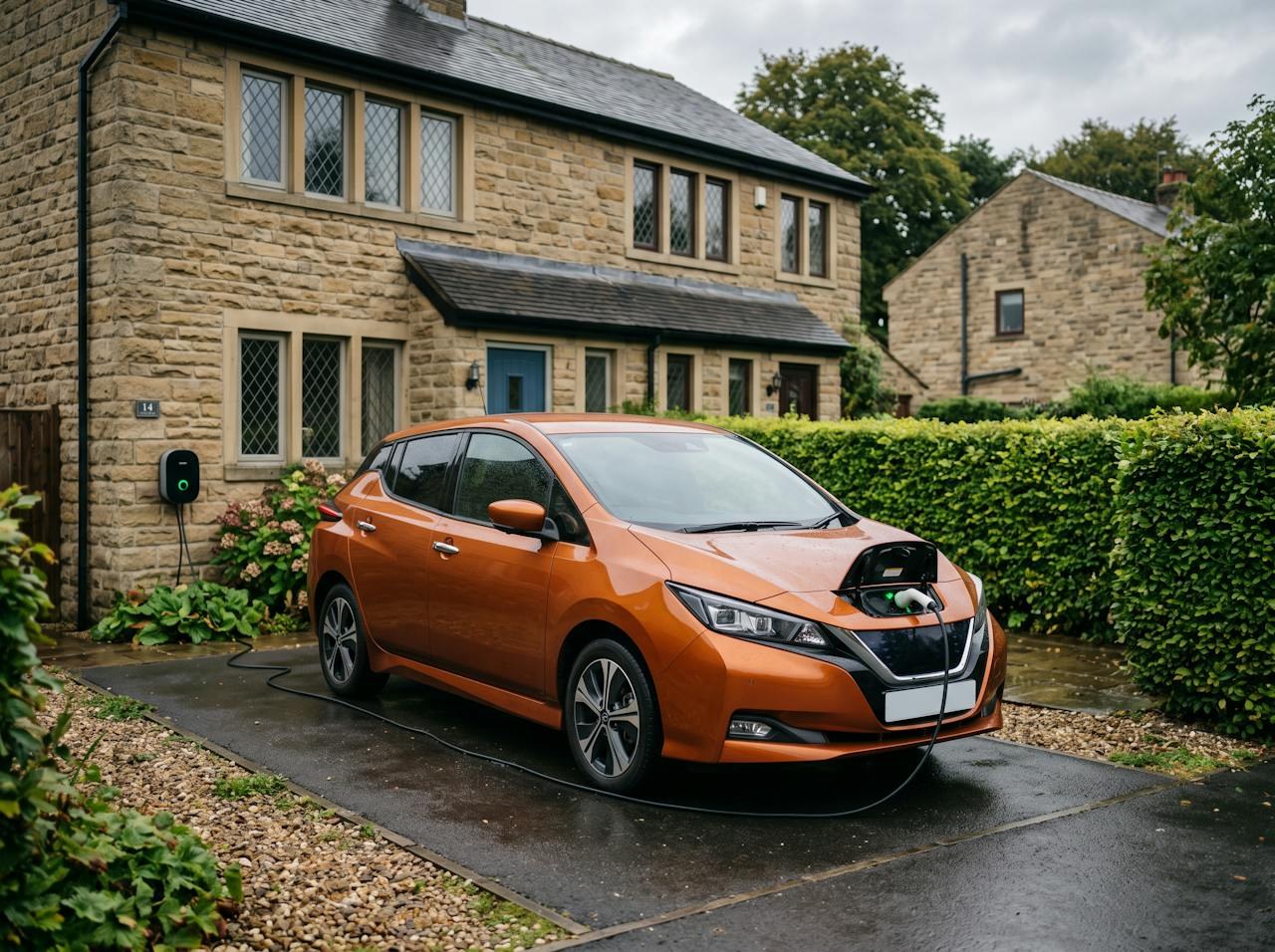
Is an electric car right for you?
The questions we get asked most often on the forecourt, answered straight, with no jargon and no sales pitch.
How far can an electric car actually go on one charge?
Most modern EVs offer between 150 and 300 miles of real-world range, depending on the model, the weather and how you drive. Official WLTP figures tend to be optimistic, so expect roughly 70 to 85% of the quoted range in everyday UK conditions. Cold weather and motorway speeds reduce range the most. For most drivers, whose daily mileage is well under 40 miles, even a modest-range EV comfortably covers a typical day without charging.
Is it cheaper to run an EV than a petrol or diesel car?
Generally yes, especially if you can charge at home overnight on an off-peak tariff, which is usually far cheaper per mile than petrol or diesel. EVs also have fewer moving parts, so servicing is simpler, with no clutch, no exhaust and no oil changes. Public rapid charging costs more than home charging, so your savings depend on how and where you charge. Use the calculators on this page to estimate the cost for your own mileage.
How long does an EV battery last, and what about replacement?
EV batteries are designed to last the life of the car and typically degrade slowly, often losing only a small percentage of capacity over many years and tens of thousands of miles. Most manufacturers provide a separate battery warranty, commonly around 8 years or 100,000 miles, guaranteeing the battery stays above a set capacity. When buying used, check the remaining battery warranty and ask about state of health. Our team can talk you through this on any EV in stock.
Can I charge an EV if I do not have a driveway?
Yes, though it takes a little more planning. Many drivers without off-street parking use a mix of public charging: rapid chargers at supermarkets and service stations for quick top-ups, and slower destination chargers at workplaces, gyms or car parks. On-street charging is expanding across South Yorkshire, including around Barnsley. If you can charge at work or near home regularly, an EV can still work well.
How long does it take to charge an electric car?
It depends on the charger. A home wallbox typically adds a full charge overnight, roughly 7 to 8 hours. A rapid public charger can take many EVs from about 10% to 80% in 20 to 40 minutes, about the length of a coffee stop. A standard three-pin plug is much slower and is best treated as an emergency option only.
Are electric cars more expensive to insure or service?
Servicing an EV is usually simpler and can be cheaper. There is no engine oil, spark plugs, exhaust or clutch to maintain, though tyres and brakes still need checking. Insurance varies by model: some EVs sit in higher groups due to performance or repair costs, while others are very reasonable, so get a quote for the specific car. Our RAC Approved service centre in Barnsley is happy to advise.
What about road tax and other running costs on an EV?
Vehicle tax rules have changed and EVs are no longer exempt from road tax. Current rates and any expensive-car supplement depend on the vehicle and its list price. Beyond tax, EVs can still offer real savings on fuel and servicing. Because the rules change over time, check the latest position on GOV.UK before you buy, and we can confirm the current cost for any car in our stock.
Where can I buy a used electric car in Barnsley?
anycolourcar.com stocks used electric and hybrid cars at its showroom at The Old Garage, Genn Lane, Worsbrough, Barnsley, S70 6TF. Every retail vehicle includes a 6-month warranty, and our own technicians are trained to work on high-voltage systems, so the people who sell you the car can service it too.
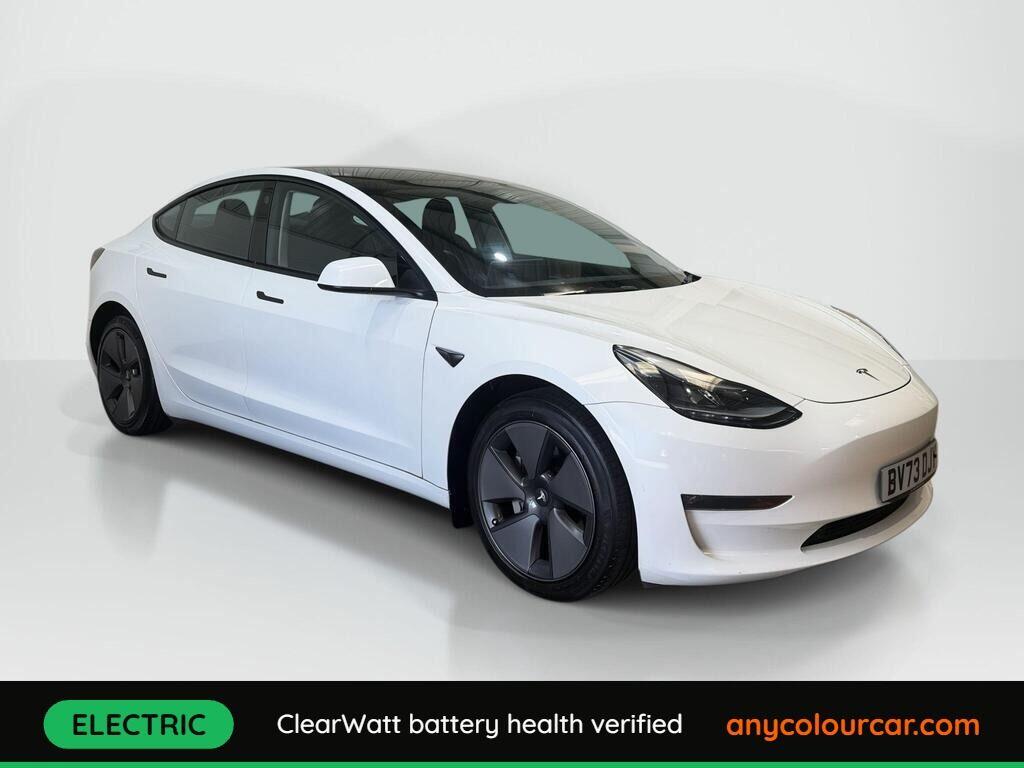
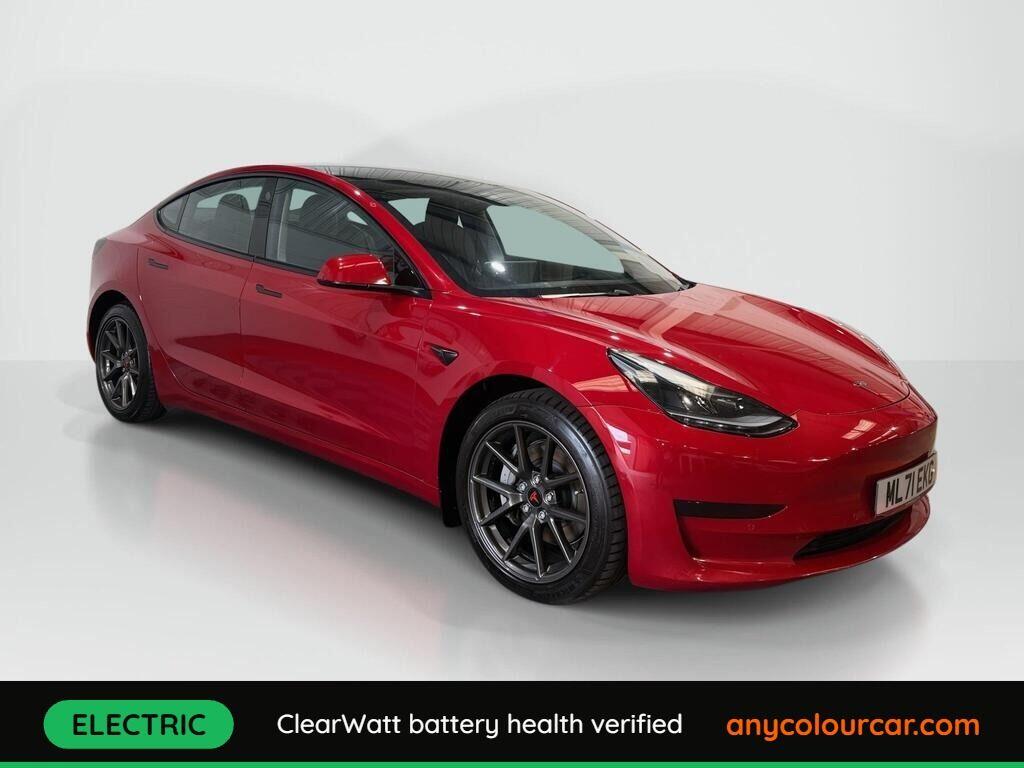
Electric cars in stock now
Recently arrived electric cars at our Barnsley showroom, each with a 6-month warranty included.
What would an EV cost you?
Two quick calculators using your own figures. Everything updates as you type and nothing is sent anywhere.
EV vs petrol: running costs
Off-peak EV tariffs can be around 7 to 10p per kWh. Most EVs manage 3 to 4 miles per kWh.
Estimated yearly saving
£966
compared with running a petrol car
- Petrol cost a year
- £1,172
- EV cost a year (home)
- £206
- EV cost per mile
- 2.6p
Home charging: cost per charge
Cost of a full home charge
£5.40
overnight, off-peak
- Cost per mile
- 2.7p
- Energy per full charge
- 60 kWh
Estimates only, for guidance. Real costs vary with tariff, driving style, weather and battery condition. Public rapid charging is typically more expensive than charging at home. To compare whole cars side by side, try our running cost calculator.
Where, how and how fast you will charge
Three charging speeds, a couple of connector types, and a wallbox at home for the cheapest miles. Here is the short version.
Slow and home (3 to 7 kW)
A home wallbox or workplace charger. Adds a full charge overnight, and is the cheapest way to run an EV.
Fast (7 to 22 kW)
Found in car parks, supermarkets and destinations. Useful for a top-up of a few hours while you are out and about.
Rapid (50 kW and above)
Service stations and rapid hubs. Many EVs go from 10% to 80% in 20 to 40 minutes, ideal for longer trips.
Connector types, simply
Nearly all modern EVs use a Type 2 plug for home and fast AC charging, and a CCS plug for rapid DC charging. A few older or Japanese models use CHAdeMO for rapid charging. Your car comes with the cable it needs, and public rapid units have their cables attached.
Find public chargers near you
Zapmap shows live availability of public chargers across Barnsley and the rest of the UK. Filter by speed, connector and network before you set off.
Open ZapmapGetting a home charger fitted
A home wallbox is the single biggest thing you can do to cut running costs, because it lets you charge overnight on a cheap off-peak tariff. Installation is usually straightforward if you have off-street parking and takes a few hours. We can point you toward a trusted installer when you buy an EV from us.
Get an EV through your salary and save tax and NI
Electric cars are taxed at a fraction of the rate of a petrol or diesel company car. Through salary sacrifice you pay from your gross salary, before tax.
- Pay from gross salary. Your monthly cost comes out before income tax and National Insurance.
- Low Benefit-in-Kind. 4% in 2026/27 for fully electric cars, rising to 9% by 2029/30.
- One monthly cost. Usually covers insurance, road tax, servicing, tyres and breakdown cover.
- Employees and directors. If your employer has no scheme yet, we can point them to a provider.
| Tax year | Electric | Typical petrol |
|---|---|---|
| 2026/27 | 4% | around 30% |
| 2027/28 | 5% | around 31% |
| 2028/29 | 7% | around 32% |
| 2029/30 | 9% | around 33% |
Petrol BIK depends on CO2 and is typically 28 to 37%, so the petrol figures are illustrative. Rates from HMRC.
Estimate your company car tax
Enter the P11D list price of the EV and pick a tax year.
Tax year
Your income tax band
Estimated annual company car tax
£640
£53 a month · taxable benefit £1,600
Indicative only, based on HMRC published BIK rates for zero-emission cars. Confirm your personal position with your employer or accountant.
Who is eligible for a salary sacrifice electric car scheme?
Most employees on PAYE can join, provided they earn enough to stay above the National Living Wage after the deduction. Some employers set a minimum service period. Directors of limited companies can usually take part too, as long as they take a salary through PAYE. If you are self-employed with no salary, or paid only through dividends, salary sacrifice will not work, but a business lease or personal contract hire might suit you instead.
What is included in the monthly cost?
Most providers bundle everything into one fixed monthly payment: the car lease, comprehensive insurance, road tax, routine servicing, maintenance, tyres and breakdown cover. Some also include early-termination protection. Fuel or charging is not included. The exact package varies by provider, so check the specifics before you sign.
How are the tax and NI savings calculated?
The lease cost is taken from your gross salary before income tax and National Insurance, so you pay less of both. The car is then taxed as a Benefit-in-Kind on its list price. For a fully electric car the BIK rate is 4% in 2026/27, rising gradually to 9% by 2029/30, so a £40,000 EV attracts £1,600 of taxable benefit, meaning a 40% taxpayer pays about £640 a year.
Can company directors use salary sacrifice for an EV?
Yes. If you take a salary through PAYE, directors can participate like any other employee. If you are paid mainly through dividends with little PAYE salary, the scheme may not be available, but a company lease or outright purchase could still offer tax advantages. Confirm your own position with your accountant.
Is salary sacrifice better than a personal lease or PCP?
For many employed drivers it costs less, because a personal lease or PCP is paid from your net income after tax, whereas salary sacrifice comes from your gross salary before tax. The trade-off is that you do not own the car at the end. If ownership matters, or you are not on PAYE, a personal PCP or HP deal may fit better.
What happens if I leave my job or the scheme ends early?
It depends on the provider and the policy of your employer. Some schemes include early-termination protection covering resignation, redundancy or long-term sick leave. Without it, you may be liable for the remaining payments. The car is tied to your employment, so if you leave you typically hand it back or transfer it to a personal lease. Always read the early-termination terms before signing up.
A family-run EV specialist in Barnsley
We are a local, family-run dealer with an RAC Approved repair centre, serving Barnsley, Sheffield, Wakefield, Doncaster and Rotherham. Our technicians are trained in high-voltage systems, so the people who sell you an electric car can look after it too.
Ask us about going electric
Range, charging at home, battery health on a used EV. Ask anything and we will give you the honest version.
Electric car guides from our team
Thinking about going electric?
Come and see our electric cars, ask us anything, or book a no-obligation chat. We will give you the honest version.