Monday, May 27, 2024
3 min read
Electric Car Terms Explained: A Plain-English EV Glossary
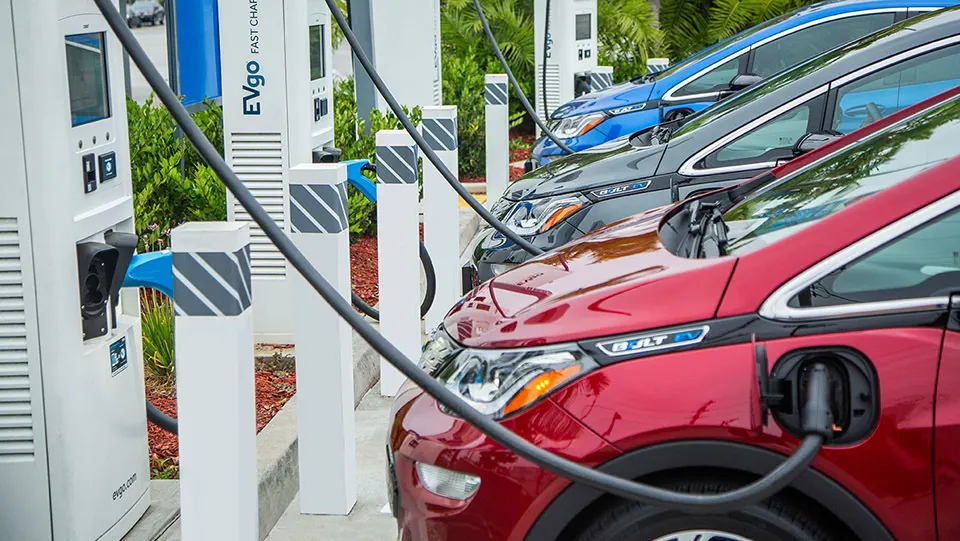
Electric car jargon comes down to three things: what powers the car (battery, engine or both), how much energy the battery holds (kWh), and how fast it can be charged (kW). This plain-English glossary explains the terms you will see on adverts, spec sheets and charging apps.
What types of electrified car are there?
BEV (battery electric vehicle)
A fully electric car. It has no petrol or diesel engine and runs only on its battery, which you charge from a plug. Often just called an EV.
PHEV (plug-in hybrid)
A petrol (occasionally diesel) engine plus a battery you can charge from a plug. It can cover shorter trips on electricity alone, with the engine taking over for longer journeys. It works best if you charge it regularly.
HEV (full or self-charging hybrid)
An engine and a smaller battery that charges itself through braking and the engine. You cannot plug it in. It can drive short distances at low speed on electric power.
MHEV (mild hybrid)
A conventional petrol or diesel car with a small electric system that helps the engine, mainly when pulling away. It cannot drive on electricity alone.
EREV (range-extended electric vehicle)
An electric car with a small engine that acts only as a generator to top up the battery. The wheels are driven by the electric motor.
ICE (internal combustion engine)
The traditional petrol or diesel engine, and shorthand for a car that has one.
What do kW and kWh mean?
kWh (kilowatt-hour)
A measure of energy. For an electric car it tells you how much the battery can store, much like the size of a fuel tank. A bigger kWh figure generally means more range, but efficiency matters too.
kW (kilowatt)
A measure of power. On a charger it tells you how quickly energy flows into the car. On a spec sheet it can also describe the motor's power output.
Miles per kWh
The electric equivalent of miles per gallon. The higher the number, the further the car goes on each unit of electricity.
What are the different charging speeds?
Slow or domestic charging: a standard three-pin plug. Fine for occasional top-ups, but slow for a full charge.
Home wallbox: a dedicated charger fitted at your home, usually needing off-road parking and a qualified installer. Most owners charge this way overnight.
Fast charging: typically found at car parks, supermarkets and workplaces, suited to stops of an hour or more.
Rapid and ultra-rapid charging: the high-powered chargers at motorway services and charging hubs, designed for quick top-ups on longer trips.
The speed you actually get depends on both the charger and the car. Every car has a maximum rate it can accept, and charging usually slows as the battery gets close to full.
Other terms you will come across
AC and DC charging
Home and most destination chargers supply AC power, which the car converts on board. Rapid chargers supply DC power straight to the battery, which is why they are quicker.
Type 2 and CCS
The two connectors used on most cars sold in the UK. Type 2 is used for AC charging, and CCS adds extra pins for DC rapid charging.
Range and WLTP
Range is how far the car can go on a full charge. The official WLTP figure is measured in a standard laboratory test, so real-world range is often lower, especially in cold weather and at motorway speeds.
Regenerative braking
When you lift off or brake, the motor works as a generator and puts some energy back into the battery. Many cars let you adjust how strong this is.
State of charge and battery health
State of charge is how full the battery is right now, shown as a percentage. Battery health, sometimes called state of health, describes how much capacity the battery has kept compared with when it was new. It is worth checking on any used electric car.
Preconditioning
Warming or cooling the battery and cabin before you drive or charge, ideally while still plugged in. It can improve winter range and rapid charging speeds.
Common questions
Is a hybrid an electric car?
Not fully. Only a BEV runs entirely on electricity. Plug-in, full and mild hybrids all have an engine, and they use electric power to different degrees.
What size battery do I need?
It depends on your typical journeys and where you can charge. Many drivers find their daily mileage is far lower than they expect, so a smaller battery can work well if you can charge at home.
Can I charge an electric car from a normal plug?
Yes, but it is slow and best for occasional use. A home wallbox is quicker and designed for regular charging.
Find the right electric or hybrid car
If you are weighing up an electric or hybrid car, our EV hub explains the basics, and you can browse cars in stock or compare running costs with our cost comparison calculator. Our team at anycolourcar.com in Barnsley, South Yorkshire, can talk you through the options. Call sales on 01226 574410.
Updated October 2026.
