Monday, August 11, 2025
2 min read
EV, Plug-in Hybrid or Petrol: Which Costs Less to Run?
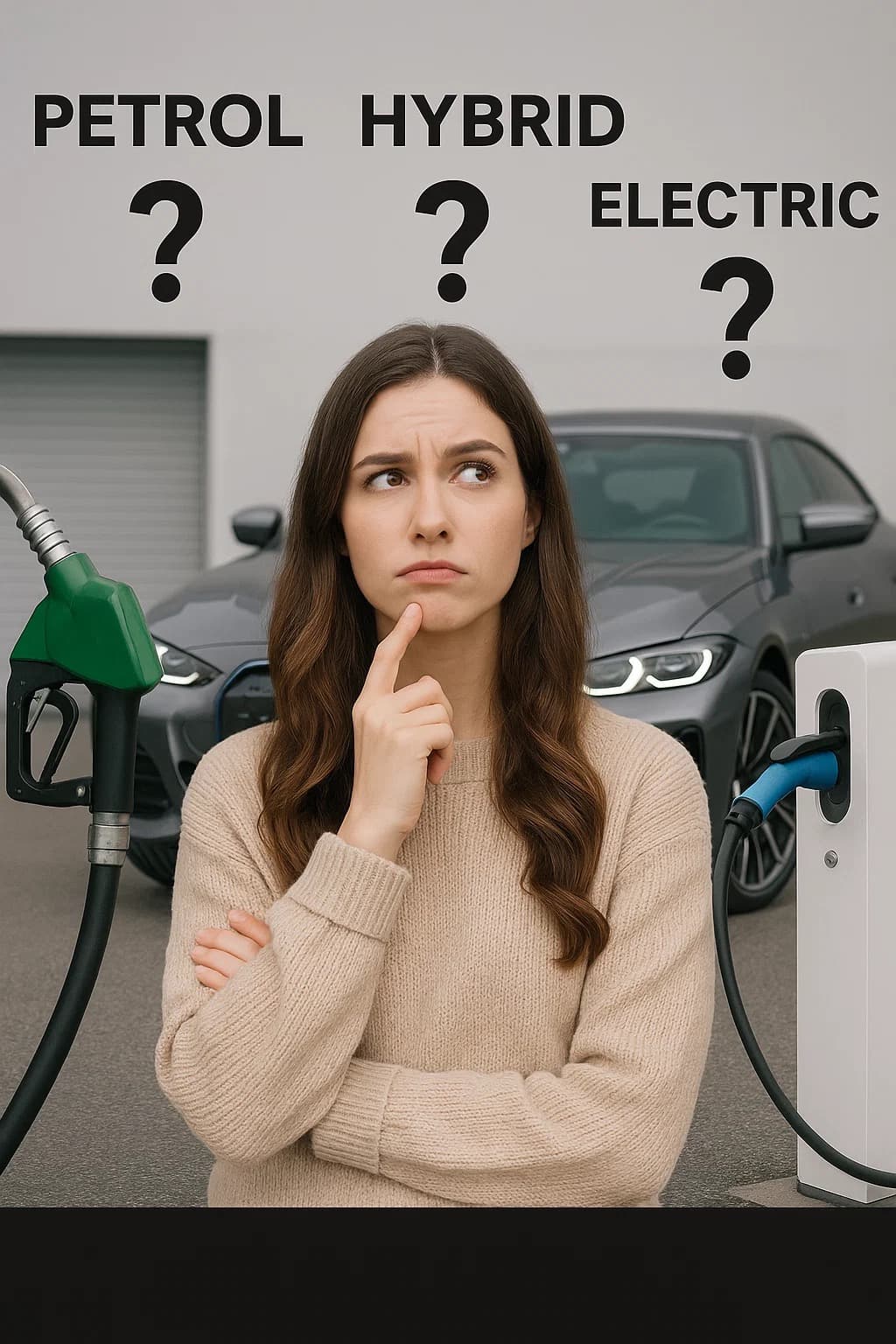
An electric car is usually cheapest to run if you can charge at home, a plug-in hybrid only saves money if you plug it in regularly, and petrol is often the simplest choice if you cannot charge. Buying any of them used avoids the steepest early depreciation.
Which is cheapest to fuel?
It depends on where your energy comes from:
Electric: charging at home, especially on an off-peak tariff, is usually the cheapest way to cover each mile. Relying mainly on public rapid chargers can bring costs closer to petrol.
Plug-in hybrid: cheap to run on short trips if charged every day, because much of that driving can be done on electricity. If it is rarely plugged in, it runs on petrol while carrying the extra weight of a battery.
Petrol: costs are easy to predict and refuelling is quick, but fuel usually costs more per mile than home charging.
Use our running cost calculator to compare cars with your own mileage and energy prices.
How do servicing and other costs compare?
Electric cars have no engine oil, spark plugs, clutch or exhaust, so routine servicing is often simpler. Brakes tend to last longer because regenerative braking does much of the work. Plug-in hybrids have both an engine and an electric system to look after. Insurance and tyres can cost more on some electric models, so get quotes before you buy.
Which loses value fastest?
New cars of all types lose the most value in their first few years. Electric and plug-in hybrid values have been more changeable than petrol, as new models and price changes affect the used market. Buying a car that is a few years old means someone else has taken the biggest drop. Our guide to depreciation explains the main factors.
Which is better for the environment?
Electric cars produce no exhaust emissions and generally have the lowest lifetime emissions, even though building the battery creates more emissions at the start. Plug-in hybrids can be low-emission if mostly driven on electricity, but much higher if rarely charged. Our guide on whether electric cars are better for the environment goes into more detail.
What about company car tax?
If you have a company car, benefit-in-kind tax is based on the car's CO2 emissions and, for plug-in hybrids, its electric range. Electric cars sit in the lowest band, which is why they are popular as company cars. Check the current rates on GOV.UK before choosing.
Which should I choose?
Electric: you can charge at home or work and most journeys are within the car's range
Plug-in hybrid: you can charge daily, do mostly short trips, but sometimes need longer range without stopping to charge
Petrol: you cannot charge at home, or you mostly drive long distances
Common questions
Do plug-in hybrids need charging?
They will still run if not charged, but you lose most of the fuel savings. To get the benefit, plug in as often as you can.
Is a used electric car a good buy?
It can be, especially with home charging. Ask for a battery health report and check what battery warranty remains. Our EV hub has more guidance.
Do electric cars pay vehicle tax?
Yes. Electric cars now pay vehicle excise duty. Check the rate for a specific car on GOV.UK.
Want to compare cars in person?
Browse the cars we have in stock or call our sales team in Barnsley on 01226 574410.
This guide is general information, not financial advice. Updated October 2026.
