Friday, March 20, 2026
3 min read
How to Spot a Cloned Car Before You Buy
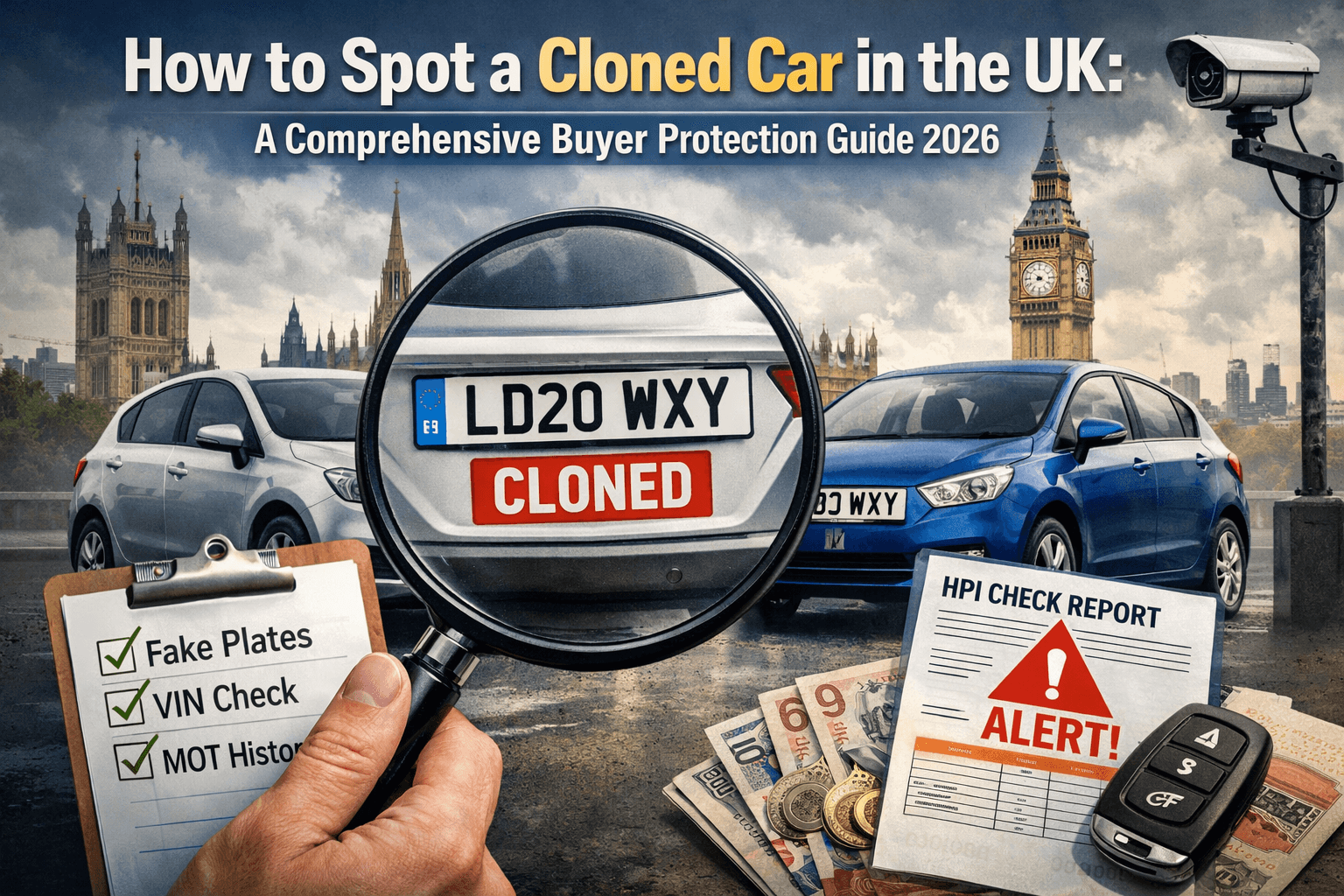
A cloned car is a stolen or written-off vehicle using the identity of a genuine car of the same make and model. You can usually catch one by checking that the VIN on the car matches the V5C, that the V5C is genuine, that the seller lives at the address on it, and that the DVLA and MOT records match the car in front of you.
What is a cloned car?
Criminals copy the registration number, and sometimes the vehicle identification number (VIN), from a genuine car that is still on the road. They put that identity on a stolen car, or one that has been written off, so it looks legitimate on paper and on a quick online check.
The genuine owner often finds out first, when speeding tickets, parking fines or charges arrive for journeys they never made.
Why does buying a cloned car matter?
The police can take the car back and return it to its rightful owner or insurer, so you can lose both the car and the money you paid.
Your insurance may not be valid, because the car is not the vehicle described on the policy.
Getting your money back from a seller who used a false identity is often difficult.
What are the warning signs of a cloned car?
The VIN on the car does not match the V5C. Check it in more than one place, usually at the base of the windscreen, on a plate in the door shut or under the bonnet, and stamped into the bodywork.
Signs of tampering around the VIN, such as scratched, re-stamped or glued plates.
A V5C that looks wrong: a photocopy, spelling mistakes, alterations, or no DVL watermark when you hold it up to the light.
The seller will not show you the car at the address printed on the V5C and wants to meet in a car park or lay-by instead.
The price is well below what similar cars sell for, and the seller is pushing for a quick deal.
Cash only, or pressure to pay before you have finished your checks.
The official records do not match the car, for example a different colour, engine size or model on the DVLA record or in the MOT history.
Brand-new number plates on an older car, or plates without the supplier's details. Our number plates guide explains what a legal plate should show.
Which checks should you make before you buy?
Enter the registration on the DVLA vehicle enquiry service and make sure the make, colour and engine size match the car.
Look through the free MOT history on GOV.UK. The mileage should rise steadily and the test locations should make sense.
Match the VIN and engine number on the car to the V5C yourself.
Ask to see the seller's ID and check that it matches the name and address on the V5C.
Pay for a private vehicle history check, which shows whether a car is recorded as stolen, written off, still on finance or has had plate changes.
View the car in daylight at the seller's home, and take someone with you if you can.
Pay by a traceable method. Our guide to safe ways to pay for a car covers the options.
What should you do if you think you have bought a cloned car?
Stop driving it and report it to the police on 101. Tell your insurer straight away.
Keep the advert, messages, receipts and payment records, as they will help the police and any attempt to recover your money. If you paid by card or with finance, contact the card provider or lender too. Citizens Advice can explain your options.
Does buying from a dealer help?
A dealer is a business you can trace, at a fixed address, and you have stronger rights under the Consumer Rights Act 2015 when you buy from a trader than from a private seller. It is still sensible to check the V5C and history yourself. See how to check a used car dealer is legitimate and your consumer rights on a used car.
Common questions
How do I know if my own car has been cloned?
Fines or penalty notices for places you have not been are the usual sign. Contact the police and the DVLA, and keep evidence of where your car was at the time.
Can a car be cloned with just number plates?
Yes. Some clones only copy the plates, which is why matching the VIN on the car to the V5C matters as much as the registration.
Will a history check always catch a clone?
No. A clone borrows the identity of a car with a clean record, so the check can come back clear. Physical checks of the VIN and documents are what usually catch it.
Looking for a used car in Barnsley? Browse our cars in stock or call our sales team on 01226 574410. Selling instead? Start on our sell or part exchange page.
This guide is general information, not legal or financial advice. Updated October 2026.
