
Friday, October 9, 2026
5 min read
Wet belt replacement in Barnsley: the £1,000 job nobody warned you about
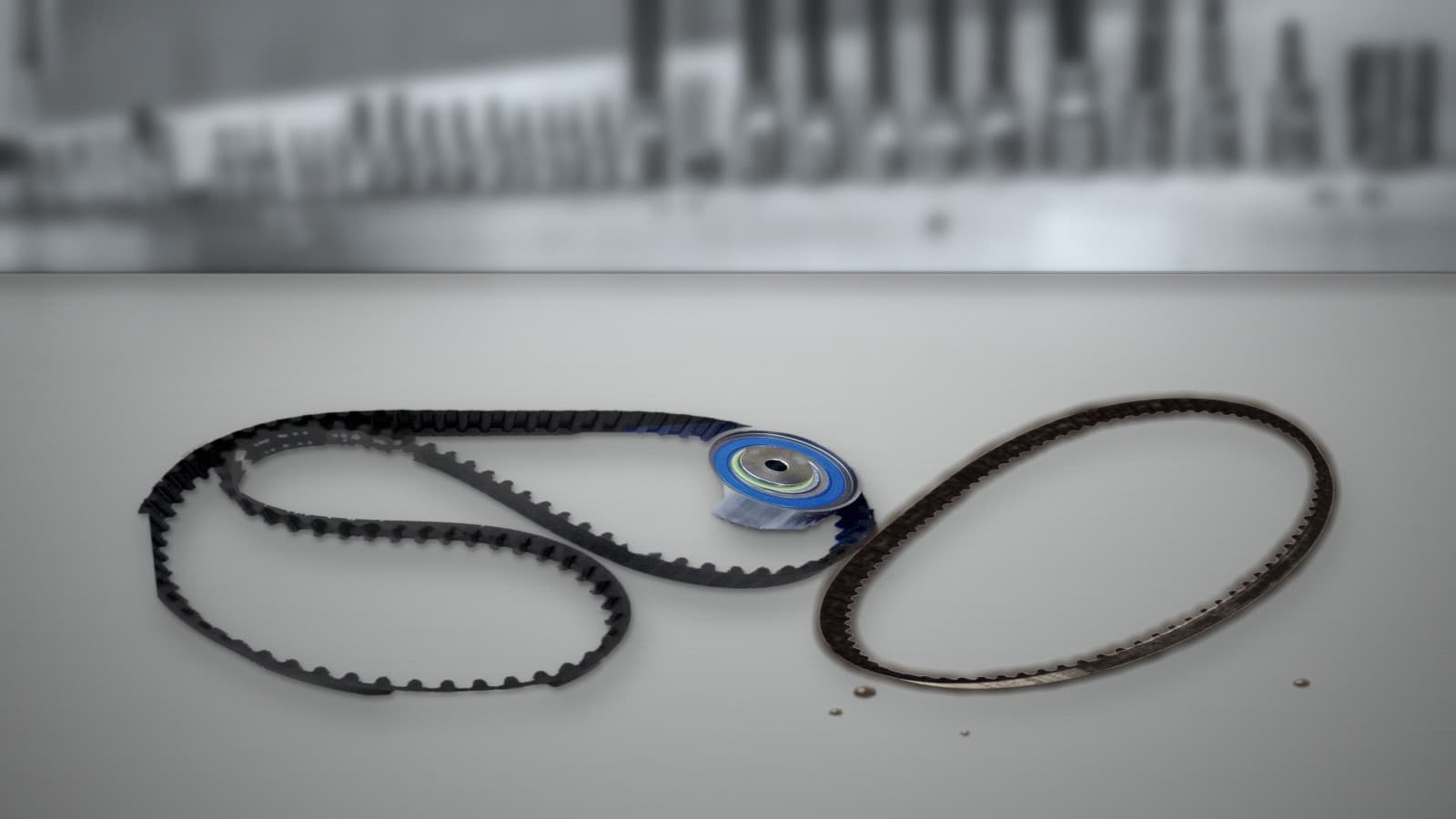
Most drivers think a timing belt is a timing belt. You change it when the handbook says, the handbook says ten years, and you forget about it.
On a lot of small petrol cars and Ford vans, that is no longer true. The belt lives inside the engine, soaking in oil, and the manufacturers have cut how long they say it lasts. If you own one, wet belt replacement in Barnsley or anywhere else can run past £1,000 — and that is still the cheaper of the two outcomes.
What a wet belt is, and why a worn one wrecks an engine
A normal cambelt runs dry, behind a cover on the side of the engine. It keeps the crankshaft and camshafts turning in step, and it gets replaced on a schedule.
A wet belt does the same job, but it runs inside the engine, in the oil. The thinking was quieter running and less friction. The catch is that the belt sits in hot oil for its whole working life, and rubber does not enjoy that.
So a wet belt is not a cambelt. When somebody rings us for a cambelt price on one of these engines, what they actually need is a wet belt, which is a different job at a different price. If you want the wider background on belts against chains, we covered it in our guide to timing belts and timing chains.
Here is the part that catches people out. A wet belt does not have to snap to ruin your engine. As it ages in hot oil, its surface starts to break down, and small pieces come away and travel round with the oil.
The oil pump draws that oil up through a pick-up with a strainer on the end, sitting in the sump, and that is where the debris ends up. Block enough of the strainer and the pump cannot pick up the oil it needs. Oil pressure drops, the parts that rely on a constant film of oil go without, and the engine starves itself.
The other way it goes is the obvious one. A degraded belt can slip or snap. If it slips, the engine's timing goes out. If it snaps, the engine stops, and you are into the kind of repair bill that makes the belt look cheap.
Which engines have one, and what the intervals are now
These are the engines we deal with, and the intervals as they stand:
- 1.2 PureTech (Peugeot, Citroën, DS and Vauxhall): cut to 6 years or 62,000 miles. If your handbook says 10 years, that figure predates the revision. PureTech engines from 2023 on use a timing chain and are not affected.
- Ford 2.0 EcoBlue (Transit and Transit Custom from 2016, Ranger from 2019): cut to 6 years or 100,000 miles, from 10 years or 150,000 miles.
- Ford 1.0 EcoBoost (Fiesta, Focus, Puma, EcoSport): Ford allow up to 10 years or 150,000 miles. We recommend 8 years or 80,000 miles. That is our recommendation, not Ford's, and the reason is simple: we see them fail earlier than Ford's figure.
- Ford Ranger 3.2 TDCi: this one has a timing chain. Nothing to replace.
Two things are worth saying about that list. The intervals are time or mileage, so a low-mileage car that mostly sits on the drive still counts the years. And the age of the car is not always the age of the belt, because some will already have had one done.
If you are not sure which engine you have, or whether the belt has been changed, the registration and the service history will tell us. Ring with the registration and we will check before anybody mentions money.
What the job involves, and the free check on every service
This is not a quick belt-and-tensioner swap. On these engines the sump comes off, because that is where the oil pick-up lives and where any debris collects.
The Essential package is what has to be done: the belt kit, the oil pump drive belt, a new crankshaft seal and single-use bolt, sump removal and reseal, the oil pick-up inspected for debris, and correct-specification oil and filter.
The Complete package is everything in the Essential, plus the parts it makes sense to change while the engine is apart: the water pump, the oil pick-up strainer, the thermostat or its housing, the auxiliary belt, spark plugs, and a coolant flush and refill. On the 2.0 EcoBlue we do the Essential, with the water pump as a £95 add-on.
The belt is designed to live in oil of a particular specification. That is why both packages finish with the correct oil, and why every service we do uses oil that meets the manufacturer's specification.
Every service we do on a wet belt engine also includes a free visual inspection of the belt through the oil filler, and what we see goes on the invoice in writing. It is a look, not a strip-down, and it is no reason to ignore the interval. What it does give you is a dated record of how the belt looked, service after service, and an early warning if it looks wrong.
"Is this just an upsell?" and "My handbook says 10 years"
Fair questions. We would ask them too.
On the PureTech and the EcoBlue, the shorter intervals are the manufacturers' figures, not ours. If your handbook says 10 years, it was written before the revision, and the older figure no longer applies.
The only place we go further than the manufacturer is the 1.0 EcoBoost. Ford allow up to 10 years or 150,000 miles, and that is a legitimate figure to follow. We recommend 8 years or 80,000 miles because of what we see come through the workshop, and we will always tell you which number is Ford's and which is ours.
If you would rather stick with Ford's figure, that is your call to make, and we will not argue. We will keep looking at the belt through the filler every time the car comes in, write down what we see, and tell you straight if it starts to look tired.
Wet belt replacement in Barnsley: what we charge
All prices include VAT. Essential is the job that has to be done; Complete adds the water pump and the other parts listed above.
- 1.2 PureTech: Essential £749, Complete £995
- Ford 1.0 EcoBoost: Essential £949, Complete £1,199
- Ford 2.0 EcoBlue Transit: Essential £1,099
- Ford 2.0 EcoBlue Ranger 4x4: Essential £1,399
- EcoBlue water pump add-on: £95
The belt check is free with every service on these engines. Our 1.2 PureTech and 1.0 EcoBoost services are £189 Minor and £339 Major, and the 2.0 EcoBlue Transit and Ranger are £219 Minor and £429 Major. For anything not on that list, ring the service centre on 01226 574 321 for a price on your vehicle.
The short version
If you drive a 1.2 PureTech built before 2023, a 1.0 EcoBoost, or a 2.0 EcoBlue Transit or Ranger, find out when the belt was last done. If nobody knows, that is your answer.
Not every wet belt engine needs work tomorrow, and a belt that looks clean through the filler is good news. Ford's 10-year figure for the EcoBoost is Ford's to set, and following it is not reckless. But the belt costs a fraction of the engine it protects, and the check costs nothing.
Ring the service centre at Stairfoot, Barnsley on 01226 574 321, Monday to Friday, 8am to 5pm, or book a service online. Give us the registration and we will tell you what your car actually has and when it is due.
We are an independent garage in Barnsley and are not affiliated with, endorsed by or authorised by Stellantis, Peugeot, Citroën, DS, Vauxhall or Ford. Intervals quoted may vary by model and model year, and we will confirm what applies to your vehicle before any work is booked.
Header photo: timing belt kit by A7N8X, Wikimedia Commons, CC BY-SA 4.0 (modified).