Wednesday, September 30, 2026
3 min read
Cat S and Cat N Write-Offs: What They Mean When You Buy Used
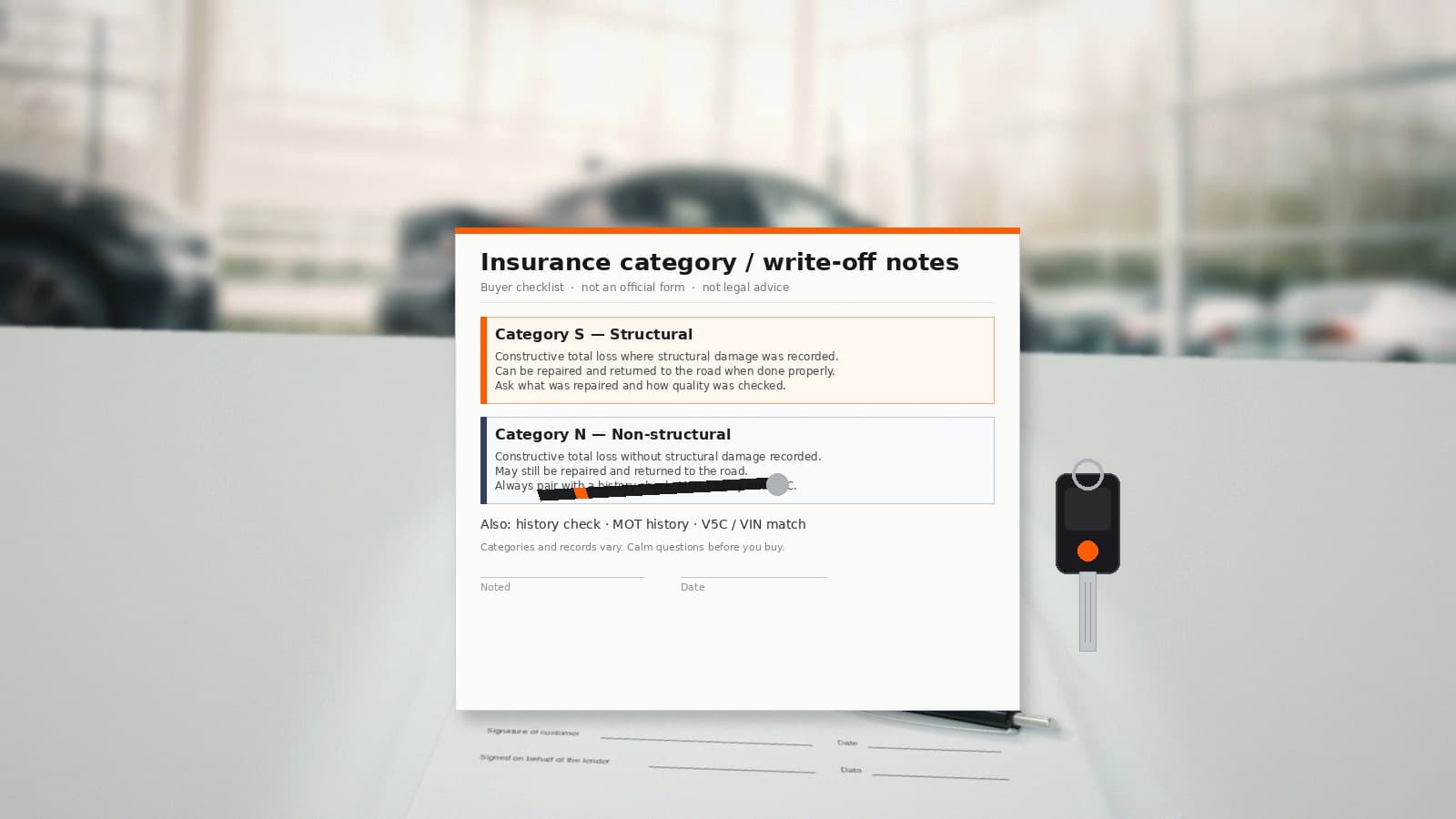
Category S means an insurer wrote the car off after recording structural damage, and Category N means the damage recorded was not structural. Both can be repaired and legally driven again, but they are usually worth less, can cost more to insure, and should only be bought once you know what was damaged and how it was fixed.
What does it mean when a car is written off?
After an accident, flood or theft recovery, an insurer may decide a car is a total loss. That happens either because it should never return to the road, or because repairing it would cost more than the car is worth to the insurer.
Category A and B: the car must be scrapped or broken for parts and cannot go back on the road.
Category S: structural damage, such as to the chassis or crumple zones. It can be repaired and returned to the road.
Category N: non-structural damage, such as to panels, trim or electrics. It can also be repaired and returned to the road.
You may still see the older labels Category C and D on cars written off before 2017. They were replaced by S and N. GOV.UK publishes a consumer guide to buying repaired written-off vehicles if you want the official detail.
Is it safe to buy a Cat S or Cat N car?
It can be, if the repair was done properly. The category tells you what was recorded at the time of the write-off. It does not tell you how good the repair was, so that is what you need to find out.
A Category N car is not automatically fine either. Damage to airbags, sensors or wiring can affect safety even when the structure was untouched.
How does a write-off affect value and insurance?
A written-off car is normally priced below a clean example of the same age and mileage, and it will be worth less again when you sell it.
Some insurers will not cover a previously written-off car, and others charge more. Get a quote before you buy.
The seller should tell you about the category. If a price looks far too low and nobody mentions a write-off, check the history yourself.
There is more on how damage history affects resale in our guide Is my car worth less after an accident?
How do you find out if a car has been written off?
Write-off markers do not appear in the free MOT history. You need a private vehicle history check, which uses insurance industry data to show write-off categories, along with outstanding finance and stolen markers.
Use it alongside the free MOT history on GOV.UK, and match the VIN on the car to the V5C. A write-off flag on a car whose VIN does not match its paperwork is a reason to walk away. Our guide to spotting a cloned car explains the identity checks.
What should you ask before buying a written-off car?
Which category is recorded, and can I see the history check?
What was damaged, and was it front, rear, side or flood damage?
Who repaired it, and are there invoices or photos of the work?
Has it had an independent inspection since the repair?
Have any airbags, seatbelts or safety systems been replaced, and are warning lights clear?
On the viewing, look for uneven panel gaps, paint that does not quite match, overspray on rubber seals and tyres wearing unevenly. Our test drive checklist covers what to feel for on the road.
Common questions
Is it legal to sell a Cat S or Cat N car?
Yes, once repaired and roadworthy. What matters is that the buyer is told. Category A and B cars cannot legally return to the road.
Does a Cat N car need to be re-registered?
No. A Category S or N car keeps its registration and V5C, which is why a history check is the only reliable way to see the marker.
Will I have to declare it when I sell?
You should tell any buyer, and most will find it on a history check anyway. Tell your insurer too, as they will expect to know.
Shopping for a used car in Barnsley? Browse our cars in stock or call sales on 01226 574410. If you want a repaired car checked over, our service centre is on 01226 574321.
This guide is general information, not legal or financial advice. Updated October 2026.
